How Dynamic TAO Lets Markets Decide Which Bittensor Subnets Get Funded
Bittensor's dTAO upgrade replaces centralised validator weighting with per-subnet tokens and automated market makers that determine emissions through staking activity.
Bittensor introduced Dynamic TAO (dTAO) in February 2025, fundamentally changing how the network allocates emissions across its subnets, according to Bittensor Docs.
Under the new system, every subnet within Bittensor is issued its own token, known as an Alpha token, alongside a dedicated liquidity pool. This marks a departure from the network’s previous structure, where validators played a central role in directing emissions to subnets.
How Staking Works Under dTAO
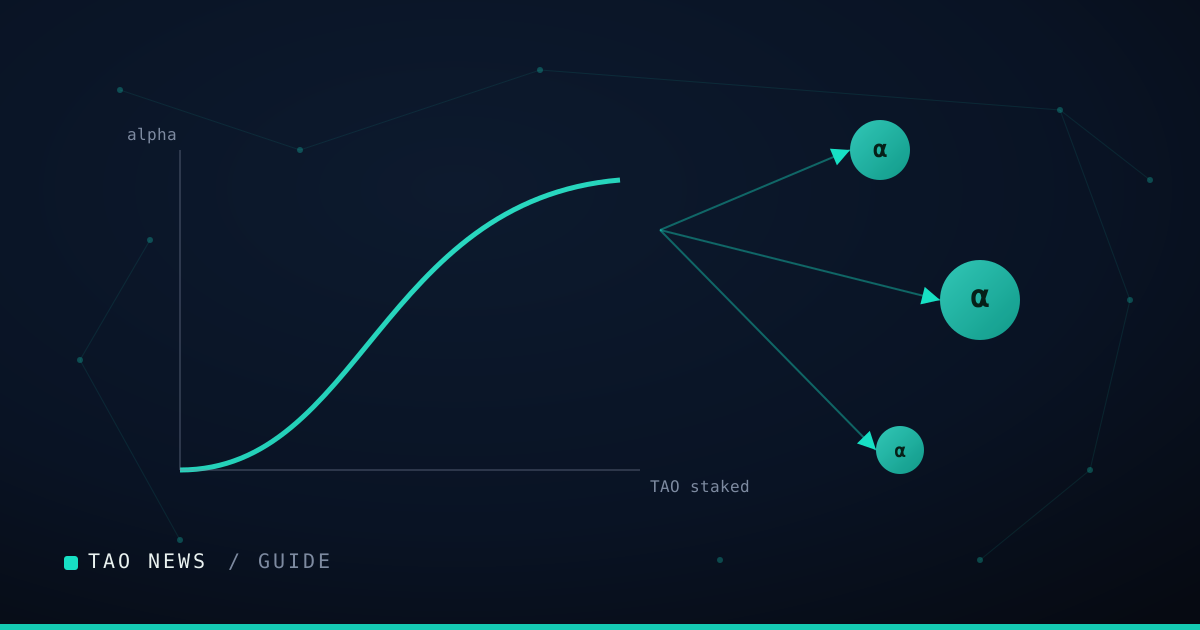
When a participant stakes TAO into a given subnet, that TAO is swapped for the subnet’s Alpha token through an automated market maker, or AMM. The AMM operates on a simple principle: the ratio of TAO to Alpha held within the pool determines the price of the Alpha token. As staking flows into or out of a subnet, this ratio shifts, causing the Alpha price to move accordingly.
This price mechanism is not merely cosmetic. According to Bittensor Docs, the amount of TAO staked into a subnet, combined with the resulting Alpha price relative to TAO, directly determines the size of the daily emissions that subnet receives. A subnet attracting more staked TAO, and consequently commanding a higher Alpha price, will see a larger proportional share of Bittensor’s daily emissions flow to it.
Market-Driven Allocation
The practical effect of this design is that emission allocation across the Bittensor network becomes a function of market activity rather than centralised decision-making. Previously, a smaller group of validators held significant influence over which subnets received funding. Under dTAO, that role is effectively handed to the broader market of stakers, whose collective staking decisions, expressed through the AMM pricing mechanism, now determine subnet funding outcomes.
This shift means that subnets must attract and retain staked TAO to sustain or grow their emissions. A subnet’s ability to draw in stakers, and thereby lift its Alpha token’s price relative to TAO, becomes the key determinant of its ongoing viability within the network’s incentive structure.
For participants navigating the Bittensor ecosystem, understanding this AMM-driven relationship between staking, pricing and emissions is central to grasping how subnets compete for resources under the current system. The introduction of per-subnet tokens and liquidity pools represents a structural change in how value and funding decisions propagate through the network, according to the documentation.